DeepSeek AI Open-Sources DeepSeek Harness: An Agent Framework Where Everything is a Plugin That Can be Swapped or Recomposed
DeepSeek AI has launched DeepSeek Harness (dsh), an open-source agent framework built on the Cordis architecture with a focus on modular plugin design.
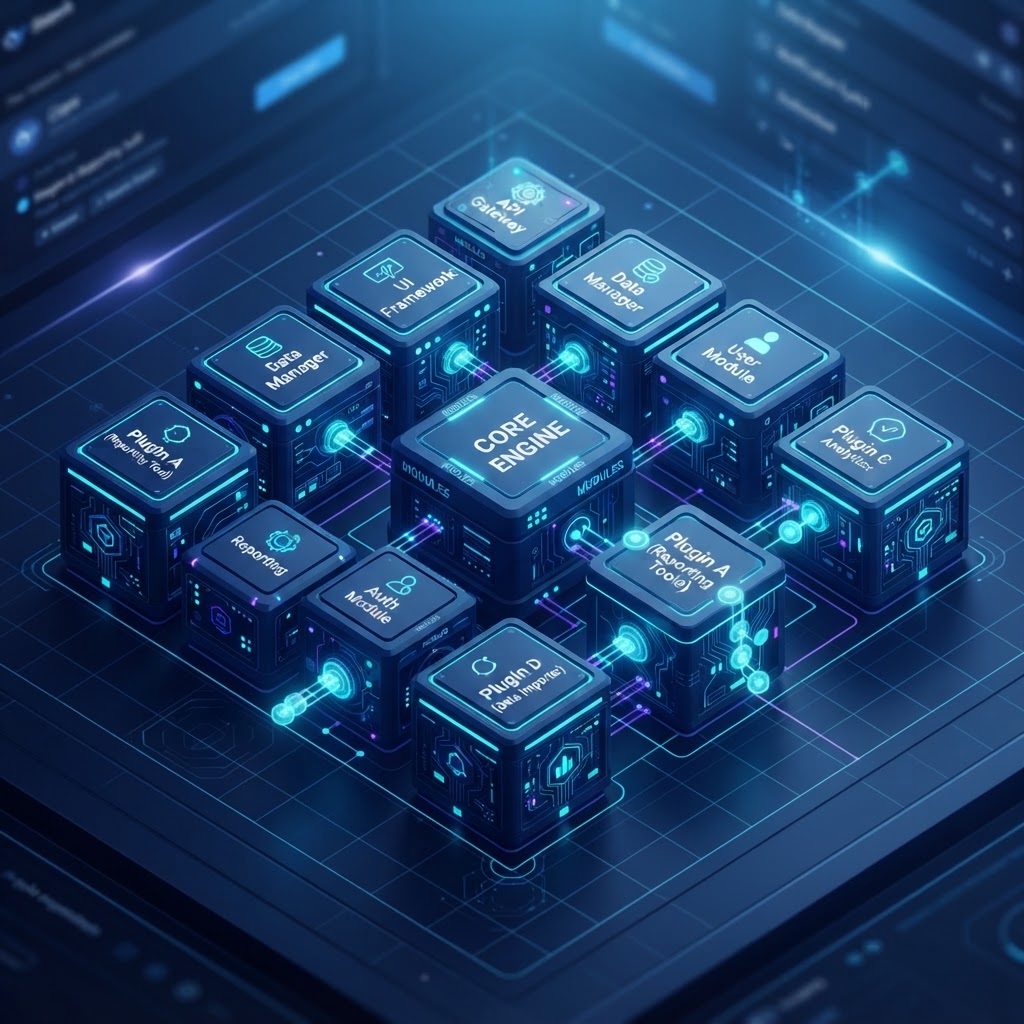
DeepSeek Harness introduces a modular plugin architecture for agent development.
- DeepSeek AI has introduced DeepSeek Harness (dsh), an open-source tool for building and managing AI agents.
- The framework utilizes a modular "everything is a plugin" architecture powered by the Cordis service-based framework.
- Currently in developer preview, the tool offers a Web UI and supports rapid iteration for agent developers.
Overview of DeepSeek Harness
DeepSeek AI, a research organization known for its large language models such as DeepSeek-V3 and DeepSeek-Coder, has officially released DeepSeek Harness, abbreviated as dsh. This new tool represents a shift toward open-source infrastructure for agentic workflows. DeepSeek Harness is described as an agent harness designed to facilitate the development, deployment, and management of autonomous systems.
The project, hosted on GitHub, emphasizes a design philosophy centered on extreme modularity. By providing a standardized environment for agents to operate, DeepSeek AI aims to streamline the process of building complex AI behaviors that can interact with various tools and environments.
Architectural Foundation: The Plugin Paradigm
The defining characteristic of DeepSeek Harness is its "everything is a plugin" architecture. This approach avoids the constraints of monolithic systems by treating every functional component—whether it be a communication interface, a tool-calling capability, or a specific agent logic—as an independent, hot-swappable module.
This modularity is powered by Cordis, an open-source framework developed by the Cordiverse team. Cordis is designed to handle complex application logic through a service-oriented model. The theoretical underpinning for this design is detailed in the paper A Programming Paradigm for Spatiotemporal Composability. In practical terms, this allows developers to build agents that are spatiotemporally composable, meaning different parts of the agent's logic and its interaction history can be managed as distinct, interoperable units.
The Role of Cordis
By leveraging Cordis, DeepSeek Harness inherits a robust plugin system that supports lifecycle management and dependency injection. This means that a plugin can depend on another service without needing to know the specifics of its implementation. For instance, an agent plugin might require a "storage service," and the harness can provide either a local file system plugin or a cloud database plugin to satisfy that requirement without changing the agent's code.
Developer Preview and Current Status
DeepSeek AI has explicitly labeled the current release of the harness as a developer preview. The development team has noted that the project is iterating rapidly. Consequently, users are warned that compatibility-breaking changes are expected as the API and internal structures are refined. This stage of development is intended for early adopters and contributors who wish to shape the future of the framework.
The project is licensed under the MIT License, allowing for broad use in both commercial and non-commercial applications. Third-party dependencies used within the project are disclosed in a separate notices file, maintaining transparency regarding the software's components.
Technical Implementation and Usage
DeepSeek Harness is built primarily using Node.js, a choice that aligns it with a large ecosystem of web technologies. Developers can interact with the harness in two primary ways: via a quick-start command or by building from the source repository.
Running via npm
For users who want to explore the interface quickly, the harness can be launched using the following command:
npx @deepseek-ai/dsh web
This command initiates the Web UI, which is served locally at http://127.0.0.1:3080 by default. The Web UI provides a graphical interface for interacting with the harness, making it accessible even to those who may not want to work exclusively in the terminal.
Source Installation
For those interested in developing plugins or contributing to the core codebase, the repository can be cloned and built using pnpm. The build process involves installing dependencies and compiling the source code before launching the harness. This method provides the most flexibility for customizing the environment and debugging new features.
Community Engagement and Ecosystem
To foster the growth of the dsh ecosystem, DeepSeek AI has established several channels for community interaction. Developers are encouraged to share their feedback and report bugs through GitHub Discussions. Additionally, a dedicated Discord community has been launched to provide real-time support and collaboration opportunities.
One of the unique aspects of the ecosystem is the encouragement for developers to tag their own plugin repositories with the dsh-plugin topic on GitHub. This creates a searchable directory of community-contributed modules, potentially expanding the capabilities of the harness far beyond what DeepSeek AI provides out of the box.
Conclusion
DeepSeek Harness represents a structured attempt to bring modular software engineering principles to the rapidly evolving field of AI agents. By decoupling the agent's logic from its underlying services and providing a plugin-based architecture, DeepSeek AI is offering a toolset designed for scalability and long-term maintenance in the open-source domain.
Enjoyed this?
Get more posts like this delivered to your inbox.