Moonshot AI Updates Kimi Code CLI with Enhanced Subagent Controls
Moonshot AI has released Kimi Code v0.28.1, introducing non-OAuth credential support and improved permission handling for subagents.
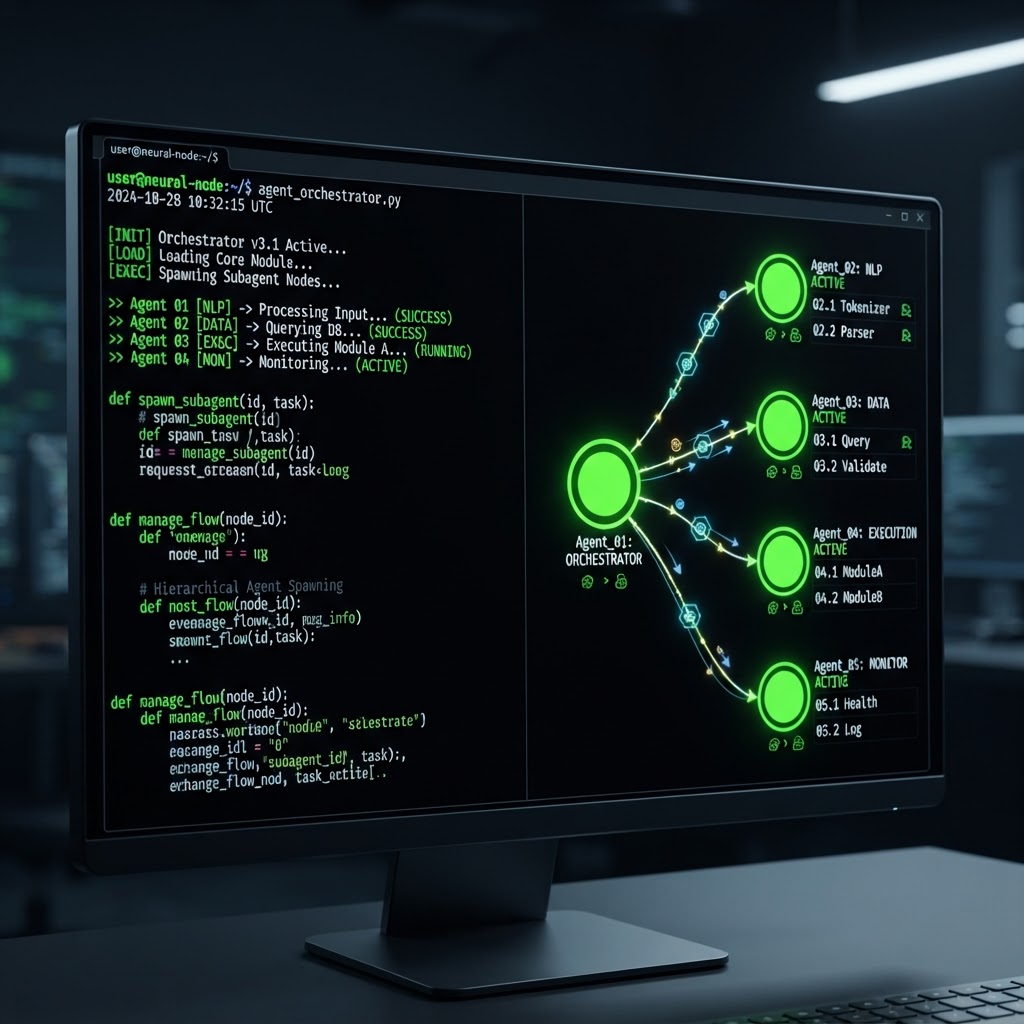
The latest Kimi Code CLI updates introduce more granular control over agentic processes and subagent permission management.
- Kimi Code CLI v0.28.1 removes the mandatory terminal login requirement for ACP sessions by supporting non-OAuth credentials.
- A major overhaul of web server management transitions the /web command to a foreground-only model for better process control.
- Subagents now dynamically observe changes to permission modes made after their initialization, improving security and oversight.
Moonshot AI Refines Agentic Workflow in Kimi Code v0.28.1
Moonshot AI, the developer behind the Kimi large language model series, has issued a series of updates to its command-line tool, Kimi Code CLI. The latest iterations, specifically versions 0.28.0 and 0.28.1, focus on streamlining the authentication process, revising how the tool handles internal web servers, and ensuring that agentic permissions are strictly adhered to across hierarchical task executions.
Kimi Code serves as a development-focused agent designed to assist with coding tasks directly from the terminal. Unlike standard chat interfaces, these agents require deep integration with the local environment, necessitating robust handling of credentials and process lifecycles. The recent updates address technical debt in how the CLI manages its background tasks and how users authorize the agent to act on their behalf.
Authentication Flexibility via Non-OAuth Credentials
One of the most significant changes in version 0.28.1 is the update to the Agentic Control Protocol (ACP) sessions. Previously, users were often required to perform a terminal-based login, typically involving an OAuth flow. Change #934 now allows ACP sessions to initialize using configured non-OAuth model credentials. This modification is particularly relevant for developers working in environments where interactive browser-based authentication is difficult or impossible, such as remote servers, CI/CD pipelines, or containerized environments.
By allowing these sessions to start with pre-configured credentials, Moonshot AI is positioning Kimi Code to be more compatible with automated workflows. This shift suggests a move toward more flexible backend integrations, allowing the CLI to interface with various model providers or private API instances without relying on a centralized user login session.
Redesigning Web Server Management
The management of internal web servers has undergone a structural change in version 0.28.0. In previous versions, the CLI utilized subcommands like kimi web kill and kimi web ps to manage servers that were likely running in the background or as separate processes. These commands have now been removed in favor of a foreground-only execution model for the /web slash command.
Under the new system, when a user invokes a web server through the agent, the server remains in the foreground of the terminal session. This allows for immediate termination using standard shell signals like Ctrl+C. The kimi server kill command has been retained but marked as deprecated, serving only as a fallback for users who may still have legacy servers running from versions prior to 0.28.0. This transition simplifies the process lifecycle and eliminates the risk of "zombie" server processes consuming system resources after the main CLI session has ended.
Dynamic Permission Synchronization for Subagents
As AI agents become more complex, they often spawn "subagents" to handle specialized subtasks. A critical challenge in this architecture is ensuring that security boundaries remain consistent. Change #1948 in the v0.28.1 release fixes a bug where running subagents failed to observe permission mode switches made after they had already started.
In practical terms, if a user changes the agent's operating mode—for example, switching from a "read-write" mode to a more restrictive "read-only" mode—any active subagents are now required to immediately respect that change. This ensures that the primary user maintains absolute control over the agent's actions in real-time. This fix is vital for maintaining the safety and integrity of a codebase, as it prevents sub-processes from continuing potentially destructive operations after a user has revoked the necessary permissions.
Platform Availability and Technical Assets
The release notes indicate that the CLI is being distributed across multiple architectures, with a specific focus on Darwin (macOS) and Linux systems. The Darwin ARM64 architecture, commonly used by modern Apple Silicon hardware, is a primary target, with the 0.28.1 update including a 48.3 MB binary. Moonshot AI continues to provide SHA256 checksums for these assets to ensure the integrity of the binaries during download and installation.
These technical refinements, while incremental, represent a focus on the "plumbing" of AI agents. By improving credential handling, process management, and permission inheritance, Moonshot AI is addressing the practical hurdles that developers face when moving from experimental AI chat to production-grade agentic workflows.
Enjoyed this?
Get more posts like this delivered to your inbox.