
Marker
 on the blogDatalab Launches Marker 2.0: An Open-Source PDF-to-Markdown Tool Built for RAG Pipeline 5 min
What is Marker?
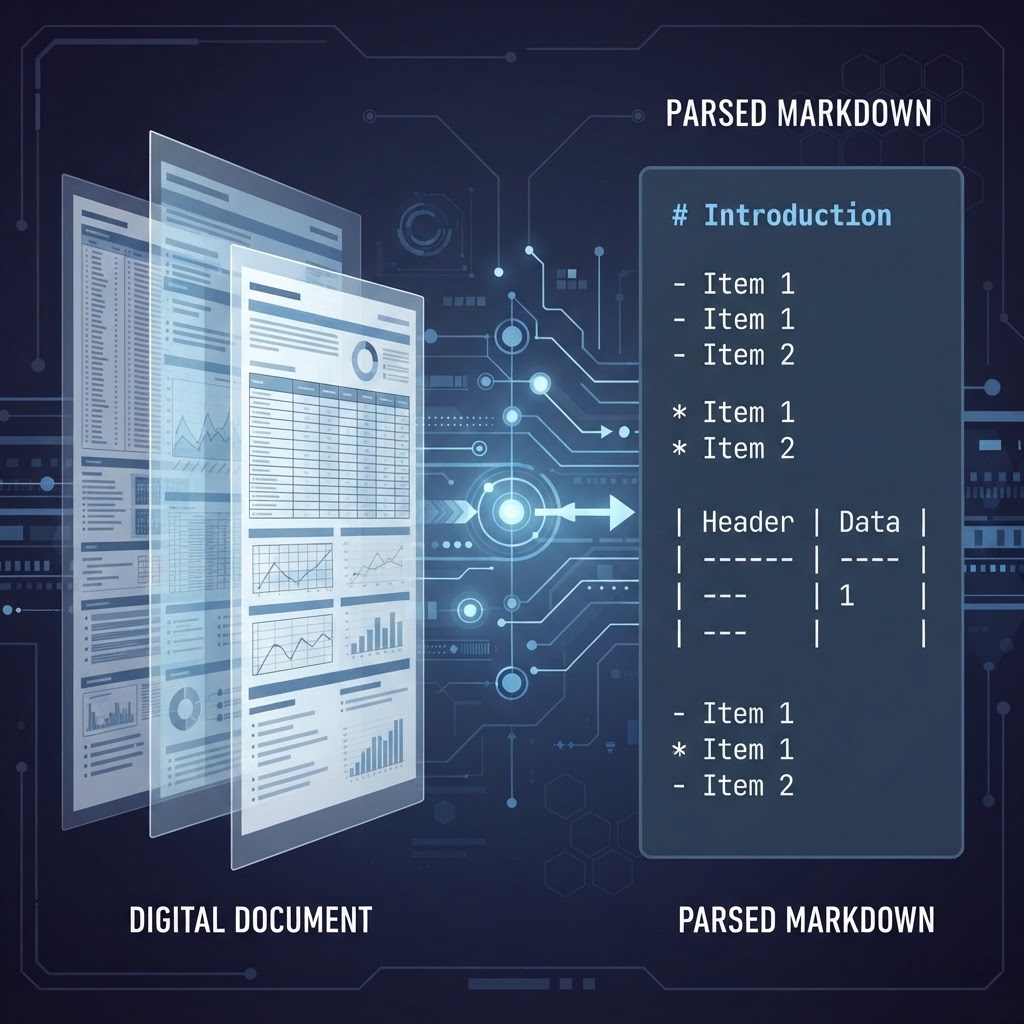
Marker is a high-performance document intelligence pipeline designed to convert PDFs, images, and various office documents into clean Markdown, JSON, HTML, or chunks. It leverages advanced deep learning models, including the Surya VLM, to handle complex layouts, tables, equations, and multi-language text extraction with high accuracy.
Marker is an open-source document conversion tool that transforms PDFs and other file formats into structured machine-readable outputs like Markdown and JSON. By utilizing a hybrid pipeline of layout analysis, OCR, and optional LLM-based refinement, it excels at preserving document structure, including tables, mathematical equations, and code blocks, while removing unwanted artifacts like headers and footers.
Designed for both local execution and high-volume production, Marker supports GPU, CPU, and Apple Silicon (MPS) acceleration. It is widely recognized for its performance on benchmarks like olmocr-bench, where it consistently outperforms many alternative open-source and proprietary solutions in both speed and accuracy. Users can further enhance results by integrating LLMs for complex tasks such as cross-page table merging and form extraction.
Marker is built by Datalab and fits into the AI/Dev Infrastructure category. It was released on Jul 20, 2026.
Marker is free to use and open source, with the source code on GitHub. Teams typically use it for model serving, hardware acceleration, observability and sandboxing, with domain-specific use in Enterprise, Healthcare and Research labs.
Who Marker is for
Teams and individual developers working in AI/Dev Infrastructure.